REVIEW · SALZBURG
The Hills Are Alive
Book on Viator →Operated by Salzburg Private Tours · Bookable on Viator
The hills feel like a movie set.
This private Sound of Music day in Salzburg pairs free hotel pickup with a personal guide who connects real places to the scenes you know by heart. I especially like how the route squeezes in key filming spots without the chaos of big buses, and how the guide’s stories make each stop feel earned, not rushed. One caution: it’s priced like a premium private tour, and food/drinks aren’t included, so you’ll want to plan a lunch break (and bring layers for mountain stops).
For 8-ish hours, you’ll bounce between classic Salzburg corners and higher viewpoints that can be weather-dependent. You’re also capped at a small group (priced for up to 7), so you get more time at photo spots and fewer “look at the camera” moments. If you’re going on a day when fog or rain hits, some panoramic angles may be shortened, and you may need to trust the guide to adjust on the fly.
In This Review
- Key Things That Make This Tour Worth Your Time
- How a Private Sound of Music Day Works (and Why It Feels Different)
- Price and Value: What You’re Really Paying For
- Pickup to Final Drop: Timing Across an 8-Hour Day
- Mirabell Gardens and the Puppet Theater: Salzburg’s Movie Memory Lane
- Mönchsberg Lift and the Do Re Mi View: Where the Hills Start Talking
- Classic Salzburg Icons: Fountains, Riding Schools, Cemeteries, and the Mozart Bridge
- Residenzplatz Market and St. Peter’s Abbey: Baroque Drama in Plain Sight
- Lake and Palace Stops: Leopoldskroner Weiher, Hellbrunn Gazebo, and Frohnburg Gates
- Rossfeld Panoramastrasse and Berchtesgaden: When Weather Makes or Breaks the Best Shots
- Sound of Music Trail, St. Michael Wedding Basilica, and Mozartblick Views
- What I’d Expect From Your Guide (and Why Names Matter)
- A Few Practical Considerations Before You Go
- Should You Book The Hills Are Alive Private Tour?
- FAQ
- Is hotel pickup and drop-off included?
- How long is the tour?
- How many people are in the group?
- What language is the tour guide?
- Are tickets to attractions included?
- Is food included?
Key Things That Make This Tour Worth Your Time
- Door-to-door pickup and drop-off in Salzburg so you skip the hassle and get started fast.
- A private guide who can tailor pace and focus, instead of herding people like a school trip.
- Sound of Music scene matching at multiple stops, from fountains to bridges to the gazebo setting.
- Panoramic viewpoints via Mönchsberg lift and Rossfeld Panoramastrasse for mountain-meadow energy.
- Small-group feel (up to 7) that helps you get photos without constant shoulder-checking.
- Lots of filming-location variety in one day, not just a few highlights.
How a Private Sound of Music Day Works (and Why It Feels Different)
This is not a quick “bus and bolt” checklist. It’s built around the idea that Salzburg is best understood in layers: the old-city details you can touch, plus the surrounding hills and lakes that made the movie work. A private format matters because you can linger where you actually care—maybe it’s the gates of a palace, maybe it’s a cemetery corner, maybe it’s the kind of viewpoint where you finally understand what the song was talking about.
With hotel pickup and drop-off, you also lose less vacation time. Instead of figuring out meeting points and transit, you’re inside the van and moving. And since you’re only with your own group, your guide can run a smoother day—short walks, quick photo breaks, then off again.
One more thing: because it’s a movie-location tour, you’ll spend time at places that look obvious on-screen. What you gain is the why: where the camera would have stood, what the real site looks like in daylight, and how the “moment” connects to the buildings around it.
Other Sound of Music tours we have reviewed in Salzburg
Price and Value: What You’re Really Paying For
At about $1,074 per group (up to 7), this isn’t a budget outing. But look at what’s included versus what you’d pay to assemble it yourself.
You’re getting:
- Private guiding for the full day
- Free pickup and drop-off at your location in Salzburg (and nearby areas)
- A planned route that hits a lot of Sound of Music-linked places
- Admissions included at specific stops (not all, but some)
If you tried to replicate this with separate tickets, taxis, and a self-guided plan, it would be messy fast—especially with viewpoints and timed scenic stops. The biggest value is the guide’s ability to manage the route and keep you from wasting time on the wrong turns or missing the best angles.
Still, I’ll be honest: food/drinks aren’t included, and a day like this can tempt you into spending more than you planned. If you’re the type who insists on a long sit-down lunch, budget extra.
Pickup to Final Drop: Timing Across an 8-Hour Day
The day starts with pickup from any hotel, Airbnb, or private address in Salzburg and nearby surrounding areas. That means you can sleep in a bit more than with group tours. It also means you should wear comfy shoes right away—because you’ll do short walks and photo stops throughout the day.
The itinerary runs through many areas, so the time you save at the start is part of the overall experience. You’ll spend most of the day moving between city sights and countryside/lake viewpoints. Some stops are brief (think a few minutes), while others are short walks with time to look around.
My practical tip: plan for weather changes. Several of the best viewpoint moments are marked as weather permitting, and that affects what you can see from high points. The guide usually has enough flexibility to make the day feel full anyway.
Mirabell Gardens and the Puppet Theater: Salzburg’s Movie Memory Lane
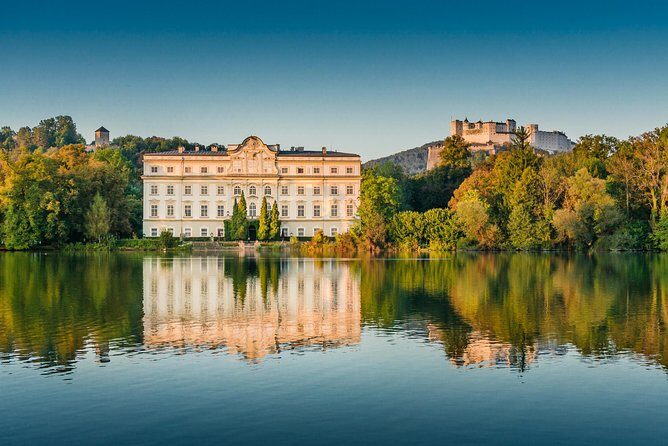
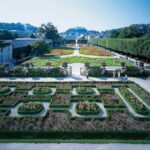
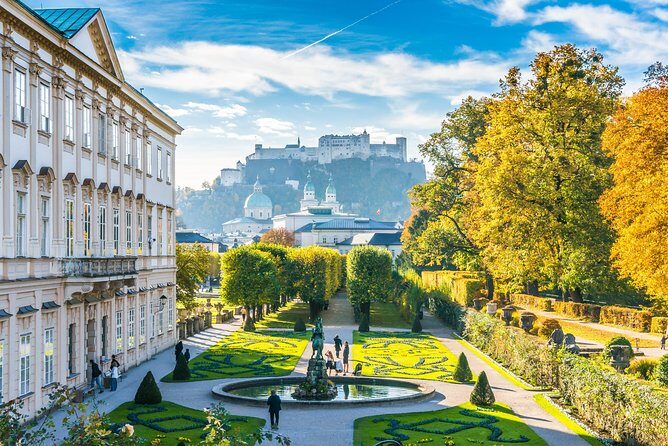
The day often kicks off in Schloss Mirabell and the Mirabellgarten, where the filming finale of Do, Re, Mi is tied to the grand garden setting. This is the part of Salzburg that feels staged in the best way: fountains, formal gardens, and those small architectural quirks that make you understand why a musical would choose this kind of backdrop.
You’ll also see elements that fans love to spot—like the Pegasus Fountain, the Dwarf Garden, and the Hedge Tunnel. These aren’t just decoration. They’re visual anchors. When you’re standing in front of them, the movie’s choreography and staging make way more sense.
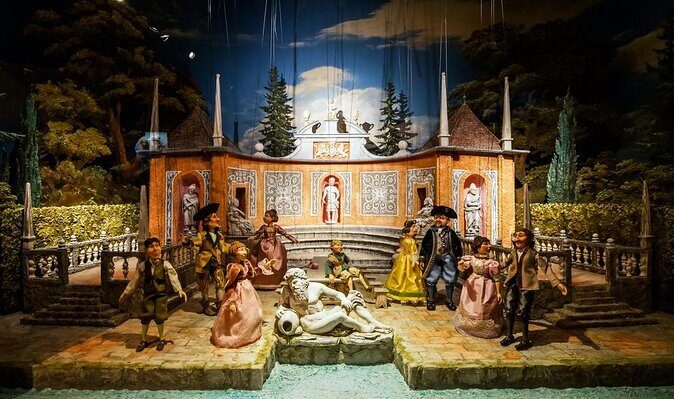
Then comes a stop that feels like a fun left turn for fans who want deeper context: the puppet theater operating since 1913, known as the oldest continuous theater of its kind. The Lonely Goatherd puppet inspiration connects you to the theatrical roots behind a famous scene—so you’re not just watching Salzburg as a set; you’re seeing how Austrian performance culture shaped the movie.
If you love the Sound of Music as a whole, this combination works because it mixes pure scenic fun with a story you might not get on a fast bus tour.
Mönchsberg Lift and the Do Re Mi View: Where the Hills Start Talking
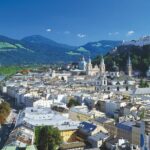
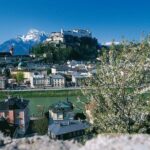
A key part of the experience is using MönchsbergAufzug for panoramic views. In the movie story, the Do, Re, Mi moment plays out with a sense of “higher ground” energy. Seeing Salzburg from above helps you understand why that song feels like it has room to breathe.
This stop includes admission, and it’s one of those moments where you’ll notice how the city sits in layers—old rooftops below, then the hills and routes that lead outward. Even if you’re not a “view person,” you’ll likely feel the payoff because it changes how you picture the movie’s geography.
A practical note: wear something that handles breeze. Higher viewpoints can be colder than Old Town, even when the city feels mild.

Classic Salzburg Icons: Fountains, Riding Schools, Cemeteries, and the Mozart Bridge
After you leave the postcard garden energy, you’ll move into the old-city landmarks that help the movie feel grounded.
You’ll see an iconic 17th-century monument fountain that used to be a horse wash and also appears in Sound of Music. The point of this kind of stop isn’t just recognition. It’s the texture: Salzburg’s older street-life details are part of why the film feels believable.
You’ll also visit a building that began as a riding school for prince archbishops and later became a theater in 1925. This is tied to the Edelweiss performance and the festival win in the escape scene logic. Even if you only remember the song, the setting helps you understand the kind of prestige and drama the story is borrowing.
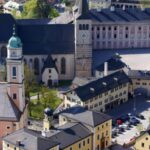
Then there’s St. Peters Cemetery, next to St. Peters Basilica and Monastery—an area that, in the film context, inspired the escape scene feel and points to Salzburg’s oldest areas reaching back to the sixth century.
Finally, you’ll reach the Mozart Bridge, built in 1903, where Maria and the children cross while pointing during the instrumental end of My Favorite Things. Bridges are great for photos, but the better value is the guide explaining the timing of scenes with where you’re standing.
Residenzplatz Market and St. Peter’s Abbey: Baroque Drama in Plain Sight
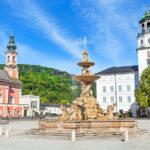
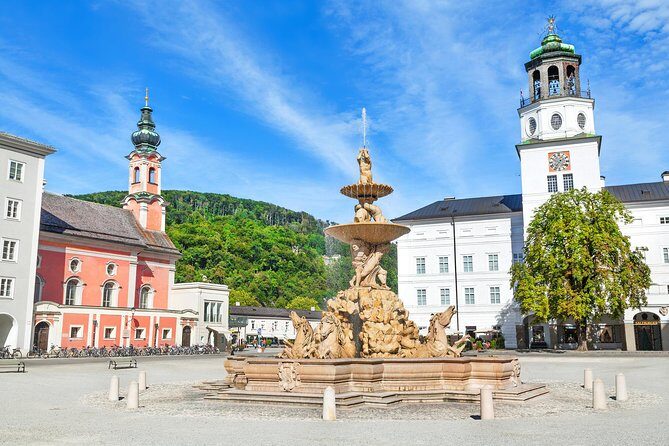
In Residenzplatz Market, you’ll find a majestic 17th-century baroque fountain linked to a memorable scene right before a bus boarding moment. Again, it’s not just fan service. It helps you connect what you watched (the action) to what exists (the setting).
Near there is a stop at the oldest abbey north of the Alps from 714 AD. Only the exterior was used in the movie; interior shots were done in a studio. That fact changes how you look at the abbey: you start spotting what would be “camera-friendly” and what the filmmakers likely emphasized.
I like this stop because it balances movie recall with real-world architecture. You can appreciate both without needing to be a Salzburg expert.
Lake and Palace Stops: Leopoldskroner Weiher, Hellbrunn Gazebo, and Frohnburg Gates
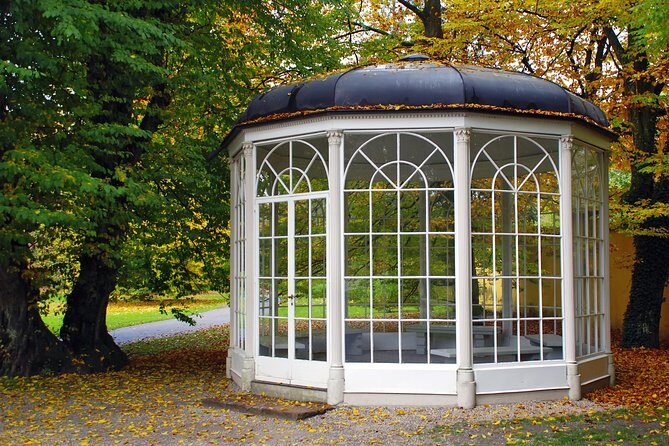
Some of the most “Sound of Music” feelings come from water and palaces.
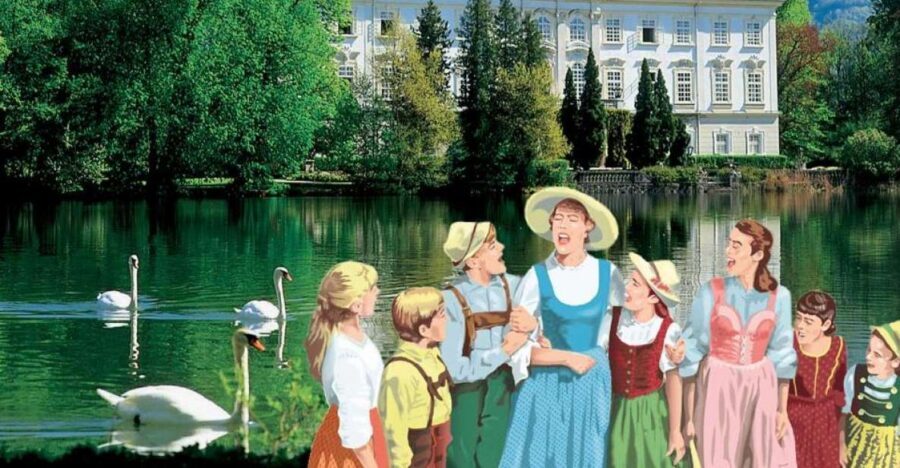
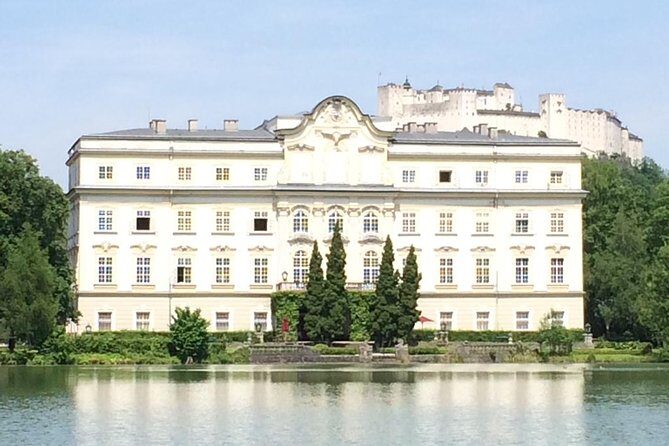
At Leopoldskroner Weiher, you get a view over the lake toward Palace Leopoldskron. This is connected to the family house backstory, including the boat scene setting and the home of the original gazebo. If you’re chasing that exact movie mood, this is where the illusion starts to work.
Next, Schloss Frohnburg gives you the gates where Maria arrived, hopping and singing I Have Confidence. It’s a short stop, but it’s the kind of short stop that hits hard because the scene’s energy matches what the entrance feels like.
Then comes Schloss Hellbrunn, known for its trick water fountains and, since 1991, tied to the original gazebo location. This stop is built for romantic movie moments—like 16 going on 17 and Something Good performed in that gazebo setting. Even if you’re not a fountain person, Hellbrunn is one of the places where the movie logic feels most alive.
For photos, aim to take a beat before you shoot. Quick photos are fine, but the real trick is letting your eyes adjust to how the place feels beyond the movie frame.
Rossfeld Panoramastrasse and Berchtesgaden: When Weather Makes or Breaks the Best Shots
If there’s one part of the day you should watch closely, it’s the panoramic road portion.
At Rossfeld Panoramastrasse, you’ll drive to a top at about 1,570 meters. Your guide walks with you to the place connected to the family hiking over the Alps to Switzerland. Admission is included here, and the point is the altitude. The views help you understand the movie’s “crossing” feeling and why the hills matter.
Then there’s a viewpoint stop at Berchtesgaden with spectacular views tied to the opening Hills Are Alive moment, again marked weather permitting.
This is also where you may need to be flexible. Clouds roll in. Rain happens. Sometimes the best solution is accepting the day you’re given and trusting the guide to keep the experience full with other sites.
My advice: bring rain protection even if the forecast looks decent. One light, packable jacket can save the whole vibe.
Sound of Music Trail, St. Michael Wedding Basilica, and Mozartblick Views
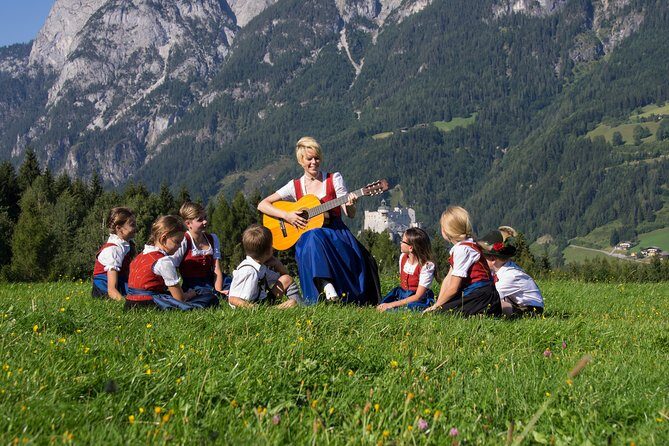
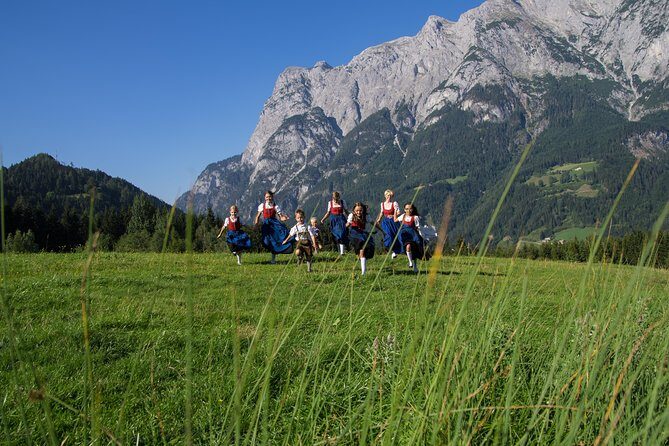
The Sound of Music Trail is built around the picnic meadow setting where Maria and the children begin to sing Do, Re, Mi. You’ll get views of the fortress Hohenwerfen and the Alps. This is where the tour shifts from “spot the scene” to “feel the scene.” The setting is the point.
You also visit Basilika St. Michael, the Sound of Music wedding basilica. It’s short, but it’s emotionally loaded for fans. If a wedding scene in your head is tied to this location, this stop gives your memory a physical place to land.
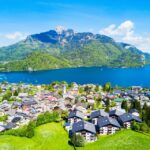
Finally, you’ll reach Mozartblick, a viewpoint above Lake Wolfgang and the town of St. Gilgen, tied to the opening scene. It also offers a view toward Schafberg, mentioned in connection with the train ride up to the picnic meadow.
Short viewpoint stops can be hit-or-miss on group tours. In a private setting, you can linger just a little longer to get the photo angle you actually want.
What I’d Expect From Your Guide (and Why Names Matter)
One of the strongest themes across this kind of tour is that the guide can make or break the day. Here, I’ve seen plenty of proof that the best experiences come from guides who truly connect the movie details to what you’re seeing on the ground.
People often mention Michael and Carlos as standouts for the way they keep the story going and make sure you hit what you came for. Others have praised guides like Naomi and Luciano for connecting film locations with Austrian context and for managing the day with patience, even when weather or pacing needs adjusting.
If you care about photos, some guides make a real effort to help you get the shot—picking spots that avoid crowds and choosing viewpoints that match what you remember from the film. If you love the details, it’s also common to hear behind-the-scenes context that helps you understand why the movie chose these locations.
My practical takeaway: if you book, think about what you want most—scenery, filming accuracy, or Austrian context—and share it at pickup. A private guide can flex more than you think.
A Few Practical Considerations Before You Go
- Food and drinks aren’t included. Plan a lunch break and bring a water bottle if you tend to get hungry or thirsty on the move.
- Weather can affect viewpoints. Some of the most important scenic stops are marked weather permitting. Go with layers and expect some adjustments.
- You’ll do short walks. Even if the day is mostly driving, you’ll step out often, so wear shoes you can move in quickly.
Also, since you’re in a private van, you’ll have fewer “official” rest breaks. That’s fine—just don’t forget that comfort matters when you’re out for about 8 hours.
Should You Book The Hills Are Alive Private Tour?
Book it if you’re the kind of person who wants the full Sound of Music experience: movie-linked stops, the scenery that shaped the scenes, and a guide who can explain how it all fits together. This is especially worth it if you care about photo angles, want to avoid big-bus crowds, and value a calm pace.
Skip it or reconsider if:
- You’re cost-sensitive and mainly want a handful of iconic photo spots
- You only care about the city center and don’t want mountain or scenic-drive time
- You’re uncomfortable with the idea that weather can change what you see from higher viewpoints
If your heart is in Salzburg because you love the film, this tour is one of the cleanest ways to turn that love into real place memory. In a day like this, the best part isn’t just watching the scenes again. It’s standing somewhere that makes you finally understand why they worked.
FAQ
Is hotel pickup and drop-off included?
Yes. Pickup and drop-off are included, and the tour offers pickup from any hotel, Airbnb, or private address in Salzburg and nearby surrounding areas.
How long is the tour?
The duration is about 8 hours.
How many people are in the group?
It’s a private tour. The price is listed per group up to 7, and only your group participates.
What language is the tour guide?
The tour is offered in English.
Are tickets to attractions included?
Admission tickets are included for certain stops as noted in the tour plan (for example, the MönchsbergAufzug stop and Rossfeld Panoramastrasse). Some other stops are marked as admission ticket free.
Is food included?
No. Food and drinks are not included, so you’ll want to budget for a meal during the day.