REVIEW · SALZBURG
Nuns and Nazis Walking Tour in Salzburg
Book on Viator →Operated by Free Walking Tour Salzburg · Bookable on Viator
Salzburg has a darker side few expect. This walking tour connects WWII Salzburg to the Sound of Music legend, using real streets, real landmarks, and guide Leo’s personal family link to the era.
What I like most is how it stays practical and place-based: you’re not stuck in lectures. You’ll walk past tangible reminders like Stolpersteine for victims and the forced-labor story tied to the city bridge, with Leo explaining what you’re seeing and why it mattered.
One possible drawback: the subject is heavy. You’ll hear about Nazi persecution, escape attempts, and forced labor, so go in with the right mindset and don’t expect a light stroll the whole time.
In This Review
- Key highlights worth your time
- Salzburg’s weird two-story problem: movie glamour + WWII reality
- Price and timing: small cost, big attention to specific places
- Where you meet and how the walk is set up
- The Mirabell Gardens start: Sound of Music scenes in full daylight
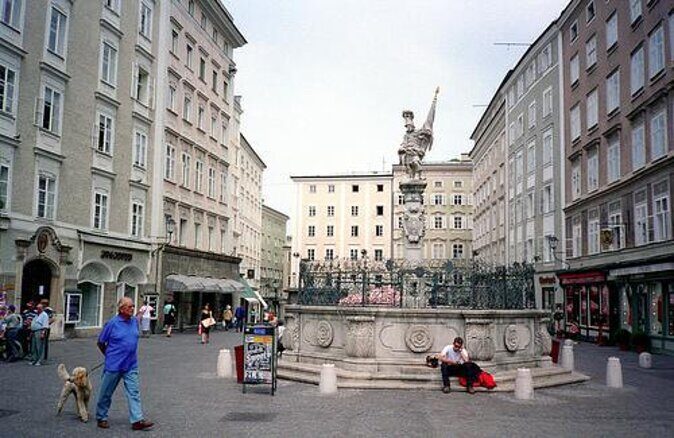
- Makartplatz: a square that kept changing names through the war
- Linzergasse and the Stolpersteine: victims remembered on the sidewalk
- Steingasse and an urban legend: when you decide what to believe
- Staatsbrücke: the bridge that tells a forced-labor story
- Alter Markt: stories of a Jewish family and escape hopes
- Grosses Festspielhaus: where the movie meets performance history
- Residenzplatz: Anschluss, Trapps, and one wartime book burning in Salzburg
- Stift Nonnberg: an old monastery, a Sound of Music ending, and Alps views
- Should you book Nuns and Nazis in Salzburg?
- FAQ
- How long does the Nuns and Nazis walking tour take?
- Where is the tour meeting point?
- Where does the tour end?
- What time does the tour start?
- What is the tour about?
- Do I need to buy tickets for the sights?
- Is there a mobile ticket?
- How large is the group?
- Is the walking route physically demanding?
- Can I get a refund if plans change?
Key highlights worth your time
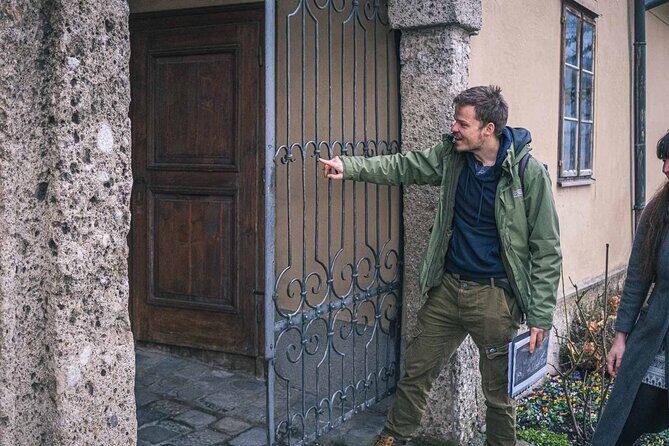
- Leo’s personal WWII connection gives the stories more weight than a textbook
- Sound of Music locations are folded into a WWII-focused route, not treated as the main show
- Stolpersteine moments (small brass markers) make the victims feel close and specific
- Forced labor at Staatsbrücke turns a normal old-town bridge into a real wartime site
- A mix of solemn and surprising stops, including an urban legend you’ll judge for yourself
- Nonnberg Abbey finish combines Sound of Music ties with an Alps-view ending point
Salzburg’s weird two-story problem: movie glamour + WWII reality
Salzburg sells a certain feeling. Even if you’ve never watched the movie, the city’s hills, squares, and gardens create a built-in “vacation mode.” This tour gently, then clearly, asks you to look at the same places through a WWII lens.
What makes it work is the focus. You’re not doing a full Salzburg history class. Instead, you get a tighter thread: World War II in Salzburg, the Trapp family story, and how film scenes connect to locations you walk past. That lets you leave with a clearer map in your head of both the movie and the real-world context behind it.
And yes, it’s guided by Leo, whose family history is connected to World War II. That personal angle matters here. It turns the walk from facts you skim into moments you actually remember.
Other Old Town walking tours in Salzburg
Price and timing: small cost, big attention to specific places
The price is $20.64 per person, and it’s easy to see why it feels like good value for a paid guided walk. You’re paying for someone to connect dozens of details—names, dates, places, and film references—into a route you can follow on foot.
The timeline is also straightforward. The tour runs about 2 hours to 2 hours 15 minutes, and it moves at a walking-tour pace. In other words, you’re not paying for a full half-day excursion. You’re buying time with a guide in a compact slice of central Salzburg.
One practical note: there’s no mention of paid museum entries at the stops. The tour lists each stop with admission marked as free, so you’re not hit with surprise ticket costs while you’re trying to stay on schedule.
Where you meet and how the walk is set up
You start at Kurgarten, Rainerstraße 2, 5020 Salzburg, and you finish at Nonnberg Abbey, Nonnberggasse 8, 5020 Salzburg. The start time is 3:00 pm, which is a smart hour if you want daylight for photography and enough time afterward to keep walking in the old town.
Expect a max group size of 25, and the format is a guided city walk. That size keeps the conversation human—more like a shared street-level tour than a mass event.
You’ll also want moderate physical fitness. This is still an old-town foot route with short stretches between sights, so wear comfortable shoes and don’t plan on rushing at the last minute if you’re slow on hills and steps.
The Mirabell Gardens start: Sound of Music scenes in full daylight
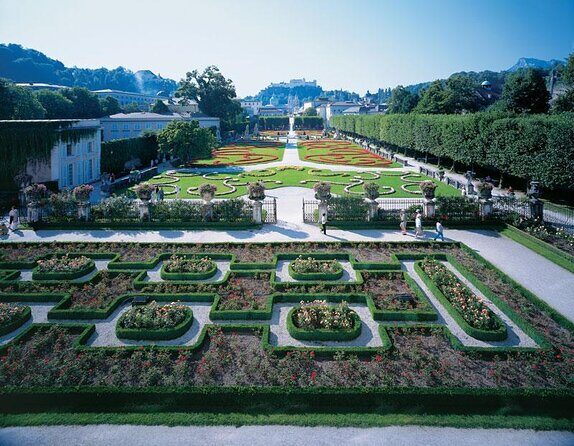
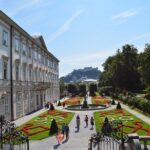
The tour begins with Schloss Mirabell and the Mirabellgarten, and you cross the gardens right after the intro. This is where “cheerful Salzburg” gets real, fast. The area is one of the best-known filming locations from The Sound of Music, so even if you only remember a few scenes, you’ll recognize the atmosphere.
What I like about using Mirabell first is psychological. You’re eased into the movie connection early, before the tour turns more serious. You start with beauty and familiarity—then you learn to see how the same streets existed in a very different historical reality.
If you want an extra advantage, rewatching The Sound of Music before you go can help. Not because you must, but because it makes the film location references easier to place while you walk.
Makartplatz: a square that kept changing names through the war
At Makartplatz, the tour focuses on how the square was renamed multiple times before, during, and after WWII. That detail might sound small, but it’s the kind of thing you usually miss on your own.
Renaming places is a quiet way power shows up in daily life. When you learn that a square shifts identity across time, you stop thinking of history as something only found in museums. It becomes something etched into the city’s everyday signage and address systems.
You’ll also notice the square’s building mix, and the way those structures reflect the war-era changes around them.
Other dark history and Nazi-era tours in Salzburg

Linzergasse and the Stolpersteine: victims remembered on the sidewalk
Then you move into Linzergasse, described as a neighborhood where common people lived. That matters because it changes the emotional scale. This isn’t only about political leaders and big events. It’s about where ordinary residents stood, lived, and tried to survive.
This is where Leo introduces Stolpersteine—small commemorative markers laid for victims of the Nazi regime. They aren’t dramatic. That’s the point. They make remembrance feel like part of walking through the city, not a distant plaque behind glass.
If you want to take something away from this stop, it’s that you’re not just learning about WWII. You’re training your eyes to notice memory built into the street layout.
Steingasse and an urban legend: when you decide what to believe
In Steingasse, you’ll hear an urban legend about a special trace of the Second World War in Salzburg. Here, the tour does something useful: it doesn’t force you to treat the story as simple fact.
Instead, you’re encouraged to decide for yourself whether it rings true. That turns the stop from a passive listen into an active moment—like you’re doing your own mini-history thinking right there on the sidewalk.
A slight caution: if you hate uncertain stories, you might find this portion less satisfying. But if you enjoy hearing how legends grow around places, it can be one of the more memorable stops.
Staatsbrücke: the bridge that tells a forced-labor story
Next comes Staatsbrücke, the main bridge in the old town. On its surface, it’s a normal crossing. In this tour, it becomes a WWII site.
Leo connects the bridge to the work done by hundreds of prisoners of war and forced laborers, who worked against their will on the construction tied to the war years. It’s a heavy pivot—from streets that hold small markers to a landmark that represents large-scale human exploitation.
What makes this stop powerful is timing. You’ve already learned how everyday life was shaped in Linzergasse. Then you see how large infrastructure projects also depended on coerced labor. One small jump in scale makes the history feel more complete, even within a short walking route.
Alter Markt: stories of a Jewish family and escape hopes
At Alter Markt, the focus turns to stories about common people, including a Jewish family and how escape from Salzburg did or didn’t happen before the Nazis took over.
This stop works because it gives you a human scale to the place names. Squares and streets become backdrops for actual choices and timing. The tour doesn’t just say what happened—it points you toward the idea that survival often depended on windows of opportunity, help available, and how quickly danger arrived.
It’s also the type of segment where listening carefully is worth your effort. You’ll probably want a moment afterward to think, not just take photos.
Grosses Festspielhaus: where the movie meets performance history
Then you reach Grosses Festspielhaus, tied to the Salzburg Festspiel scene. The tour notes that the venue appears at the end of The Sound of Music during the concert before the Trapp family fled Salzburg.
Here’s the twist that turns this stop into more than set-dressing: the tour explains that the Trapp family actually performed there. That detail helps you see how the movie’s emotional beats connect to real cultural life in Salzburg.
It’s a good mid-tour balance point: you move from heavy WWII stories to a performance space where art and identity mattered. Even if you came for WWII, this stop gives context for why Salzburg’s cultural stage mattered to the people living there.
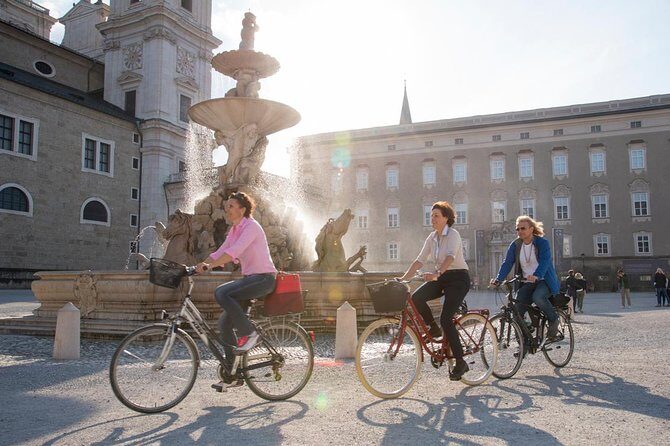
Residenzplatz: Anschluss, Trapps, and one wartime book burning in Salzburg
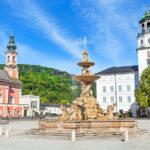
At Residenzplatz, you’re in the heart of the old town. This is where the tour tightens into major WWII themes tied to Austria’s Nazi takeover: the Anschluss.
You’ll also hear more about the Trapp family and the film history connected to their story. Then comes a specific wartime detail that the tour highlights clearly: the only book burning that took place in Salzburg during World War II.
That one line can land hard. It’s not the sort of event you’d notice while strolling the square—so having it pointed out changes how you interpret the city center. It also shows how propaganda and control reached into everyday life, down to what people were allowed to read.
Stift Nonnberg: an old monastery, a Sound of Music ending, and Alps views
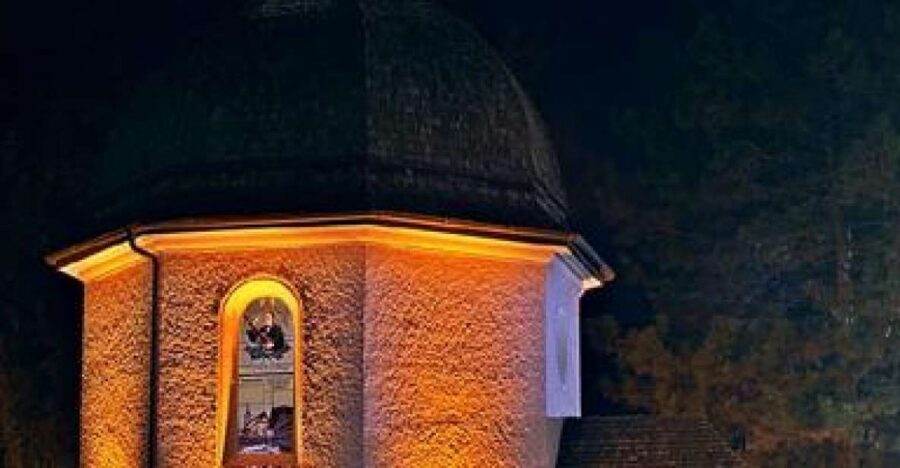
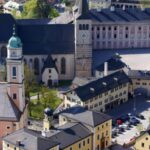
The walk leads to Stift Nonnberg, also known as Nonnberg Abbey. This is described as the abbey connected to the Sound of Music story and also identified as the oldest women’s monastery in the world.
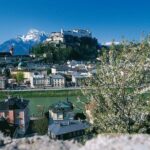
The tour gives you the final Sound of Music facts and stories here, with a major bonus: the path and church area offer a great view of the Alps. It’s a fitting ending. After hearing about loss and persecution, you get a calm, open horizon.
The tour finishes in this area, and it’s also a practical launch point for more walking. From here, you can continue along the footpath toward the fortress Hohensalzburg.
If you’re the kind of traveler who likes an ending with both meaning and a view, this is where the tour earns a strong finish.
Should you book Nuns and Nazis in Salzburg?
I think you should book it if you want more than movie scenery and you like history that’s tied to specific street-level places. The combination of Leo’s personal WWII connection, the Stolpersteine moments, and the real landmark stories (like Staatsbrücke) make it feel focused and worth your time.
Skip it—or at least pair it with a lighter plan—if you’re sensitive to stories about persecution and forced labor. Also, if you only want cheerful Sound of Music content, this isn’t that tour. It uses the movie as a doorway, then walks straight into a darker chapter of Salzburg.
FAQ
How long does the Nuns and Nazis walking tour take?
The tour runs about 2 hours to 2 hours 15 minutes (approx.).
Where is the tour meeting point?
It starts at Kurgarten, Rainerstraße 2, 5020 Salzburg, Austria.
Where does the tour end?
It ends at Nonnberg Abbey, Nonnberggasse 8, 5020 Salzburg, Austria.
What time does the tour start?
The start time listed is 3:00 pm.
What is the tour about?
It focuses on World War II in Salzburg, including traces of the Nazi era still visible today, plus the history of the Trapp family and the movie connection to the city.
Do I need to buy tickets for the sights?
The stops listed show admission ticket free, so you’re not being pointed toward paid attraction entry at each stop.
Is there a mobile ticket?
Yes. The tour offers a mobile ticket.
How large is the group?
The tour has a maximum of 25 travelers.
Is the walking route physically demanding?
It’s described as requiring moderate physical fitness, so plan for a walking city route.
Can I get a refund if plans change?
Yes, there is free cancellation. You can cancel up to 24 hours in advance for a full refund.