REVIEW · SALZBURG
Salzburg Introduction Private Walking Tour
Book on Viator →Operated by Insight Cities · Bookable on Viator
Salzburg is a city you understand faster on foot. This private walking tour is built for getting your bearings in the Old Town while learning the stories that make Salzburg stick. I like that it’s led by local historian guides, and the way they host can matter a lot in cold weather. One guide named Liza is specifically praised for keeping spirits up and even timing pauses for sunnier spots when it gets frigid.
Two big wins for me: you get guided access to Mozart landmarks without treating them like checkboxes, and you also see beyond the famous postcard scenes. You’ll pass the Baroque-faced burgher houses of the commercial center, learn how the city’s salt trade and medicine helped shape it, and hear the Sound of Music connections as part of the bigger Salzburg picture.
One possible drawback is that some of the most meaningful parts are tied to what you choose to enter. Mozart Residence admission isn’t included, and one person felt the tour didn’t feel much different from doing a self-guided walk. If you want a lot of museum time, bring that expectation (and your wallet for the paid entry).
In This Review
- Key points to know before you go
- Why this Salzburg Old Town intro works as a private walk
- Getreidegasse and Salzburg’s commercial heart: medieval meets Baroque
- Mozart’s birthplace on Getreidegasse: seeing the exact address
- Mozart’s Residence and the museum exhibit: where the admission choice matters
- St. Peter’s Abbey (Erzabtei Stift St. Peter): the 696-year anchor
- Mirabell Palace and Mirabellgarten: Baroque splendor without the long museum time
- Sound of Music and the stories your guide threads through
- Price and value: what $565.93 per group really buys you
- Timing tips for a comfortable Old Town walk at 2:00 pm
- Who should book this private Salzburg intro
- Should you book this Salzburg Introduction Private Walking Tour?
- FAQ
- How long is the Salzburg introduction private walking tour?
- Where do we meet the guide?
- Does this tour include pickup?
- What is included in the price?
- What is not included?
- What language is the tour in?
- Is this tour private?
Key points to know before you go
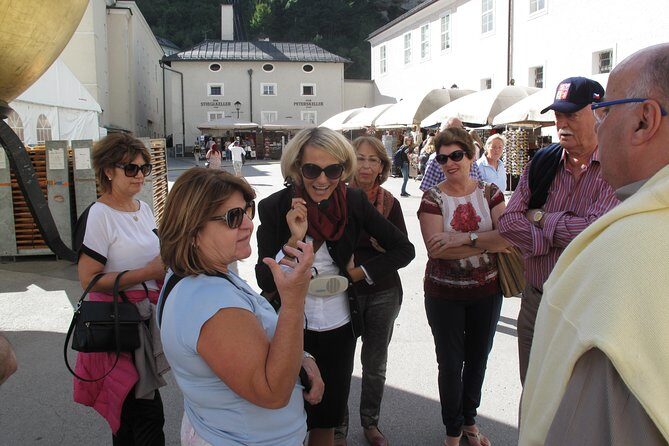
- Private, up to 10 people: your guide can pace things for your group instead of funneling you through crowds.
- A true Old Town route: narrow zigzag lanes, medieval charm in the commercial center, and easy-to-follow walking links between stops.
- Mozart stops with context: you see both the birthplace address and the residence area, with a guided story around his family and Salzburg’s classical scene.
- St. Peter’s Abbey (founded 696): one of the oldest Benedictine foundations in the German-speaking world.
- Mirabell Palace and gardens: a Baroque reset with Italian-influenced squares and mythological detail.
- Cold-weather hosting: a guide’s ability to keep the mood up can make this tour feel like a win, even when the weather is nasty.
Why this Salzburg Old Town intro works as a private walk

Salzburg’s center can feel like it’s made for wandering. The problem is that wandering without a plan can leave you staring at buildings and missing the threads. This tour is designed to connect those threads fast: architecture, power, music, and the city’s survival story.
You’ll meet your guide at Café Glockenspiel at Linzergasse 39 (unless you’ve arranged pickup). Then you’ll head into the narrow lanes of the Old Town, where the street pattern does you a favor. Those zigzags naturally slow you down, so you notice details—Baroque façades on older foundations, arches and pass-throughs that open into small squares, and the medieval “feel” that still lingers in Salzburg’s shopping core.
The tour clocks in at about 2.5 hours, but it reads like a focused introduction rather than a long slog. You end back in the Old Town center, which matters because it keeps the rest of your day flexible—coffee, shopping, or hopping on public transit without feeling pinned to a rigid schedule.
Other Old Town walking tours in Salzburg



Getreidegasse and Salzburg’s commercial heart: medieval meets Baroque
Your first real “Salzburg moment” comes through Getreidegasse, the famous shopping district that’s almost a museum of street life. This is where you’ll enjoy the narrow, crooked lanes of the Burgher Town. The guide’s job here is key: Getreidegasse is easy to enjoy, but it’s even better when you know what you’re looking at.
You’ll walk past wealthy burgher houses, and the visual contrast is part of the point. Salzburg has this habit of keeping the medieval bones while layering Baroque style on top—so you feel the city’s layers instead of just seeing a single era. That mix is also why the commercial center still feels distinctive today, not like a generic mall strip.
This stop is short (about 25 minutes) and ticket-free, which is ideal early on. It helps you settle into the route and learn the “rhythm” of the walk before you get to the heavier music sites.
Practical note: Getreidegasse can be busy at certain times. A private guide helps you time passages and stay oriented, especially if you’re not used to Old Town street maps.
Mozart’s birthplace on Getreidegasse: seeing the exact address
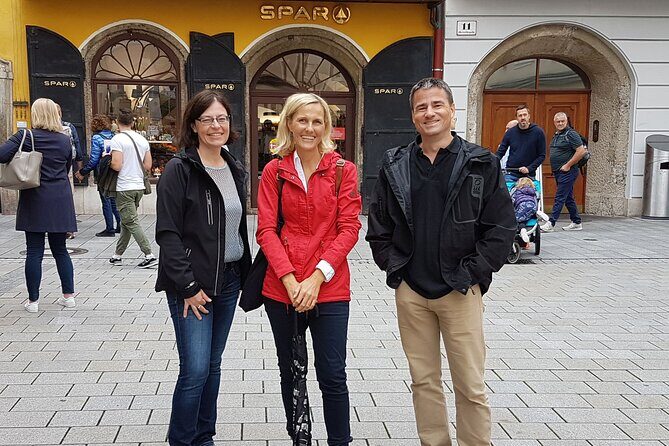
Mozart in Salzburg can become a blur if you only remember a name and a photo. This tour keeps it concrete. You’ll head to Mozart’s birthplace at No. 9 Getreidegasse, where the Mozart family lived on the third floor from 1747 to 1773. Even if you’ve seen Mozart-related images for years, standing at the birthplace address changes how you picture the story.
What I like here is the way your guide ties Mozart’s childhood and family into place. Instead of a lecture that floats above the streets, you get anchored context while you’re physically in the location that mattered. The tour also brings in other Salzburg classical composers—like Michael Haydn—so Salzburg doesn’t feel like a one-composer town.
From a value standpoint, the route doesn’t stop at “look at this.” It uses the birthplace area as the launch pad for what comes next: Mozart’s residence and its museum exhibit.
Mozart’s Residence and the museum exhibit: where the admission choice matters
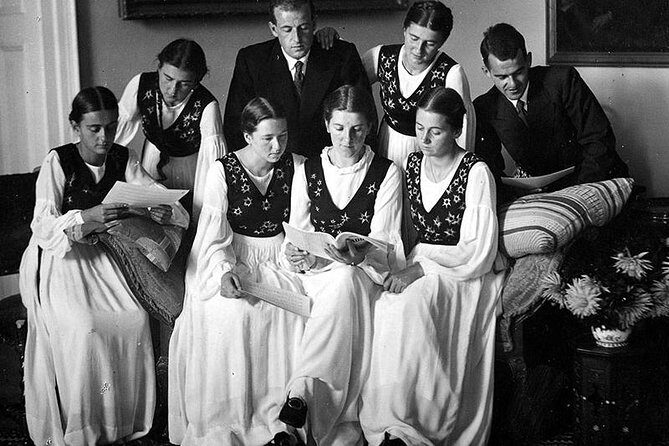
After the birthplace, you’ll visit Mozart’s residence area and explore the museum exhibit with your guide. Here’s the key practical detail: Mozart Residence admission is not included.
That means you’re deciding between:
- Getting the exterior sights and the guided story, or
- Paying for the museum entry so you can spend time with the exhibit content.
If you’re the type who wants to read every label and linger, you’ll probably want to budget for that admission. If you’re more interested in architecture and storyline than inside exhibits, you might still enjoy the guided visit, but you’ll want to accept that the paid museum piece is where some of the depth lives.
Either way, your guide’s job is to shape your visit so it doesn’t feel random. A good narrative helps you connect what you see inside to the streets outside—music isn’t just a timeline here; it’s part of Salzburg’s identity.
St. Peter’s Abbey (Erzabtei Stift St. Peter): the 696-year anchor
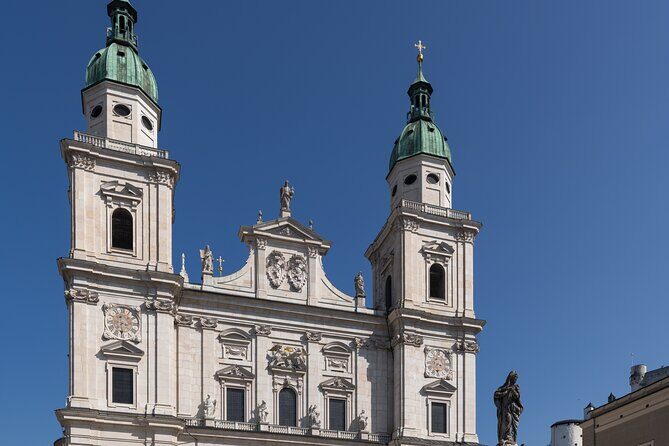
Then you shift from music street-level to something built for centuries. St. Peter’s Abbey, or Erzabtei Stift St. Peter, is a Benedictine monastery and former cathedral. It’s considered one of the oldest monasteries in the German-speaking world since its foundation in 696.
This is one of the most satisfying stops on the tour because it gives you a different scale. In the space of a short walk, you move from burgher commerce and music landmarks into a place that feels like it carries Salzburg’s long memory. Even if you’re not a church-architecture specialist, you can still get a lot out of it when your guide frames the abbey as part of the city’s development.
This stop is also ticket-free according to the tour details, so you’re not pressured into spending more right there. It’s about absorbing the setting and understanding what the abbey meant over time. Your guide will share additional city history, keeping the connection to Salzburg’s bigger themes—how the city functioned, how ideas spread, and how Salzburg became Salzburg.
Other walking tours we've reviewed in Salzburg





Mirabell Palace and Mirabellgarten: Baroque splendor without the long museum time
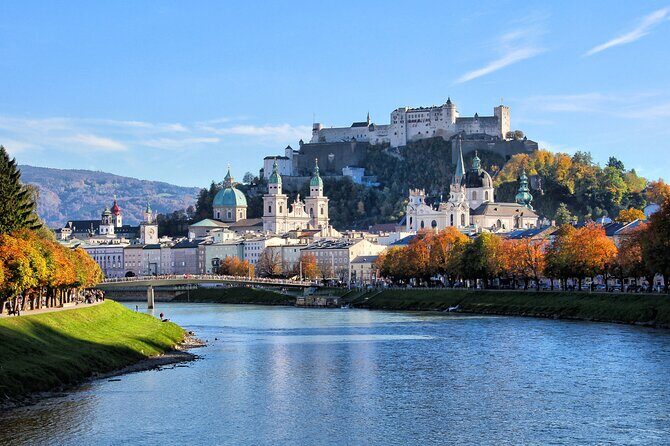
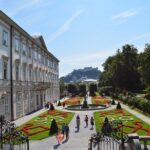
After St. Peter’s Abbey, the tour brings you to a brighter, more theatrical Salzburg: Schloss Mirabell and Mirabellgarten. Expect Italian-influenced Baroque squares in the Residenz District, where the archbishops once presided. That line matters. Salzburg’s political and religious power shaped the city’s look, and the Mirabell complex is one way to see that influence clearly.
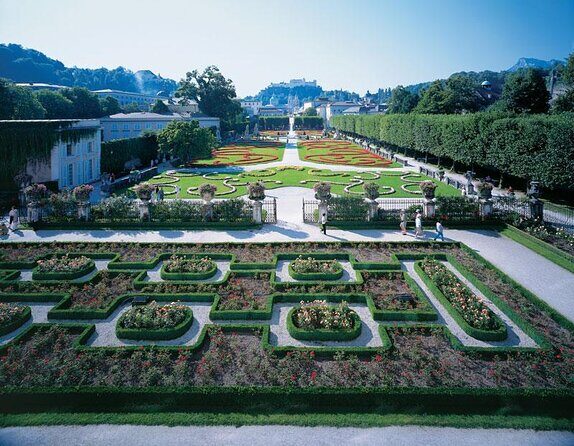
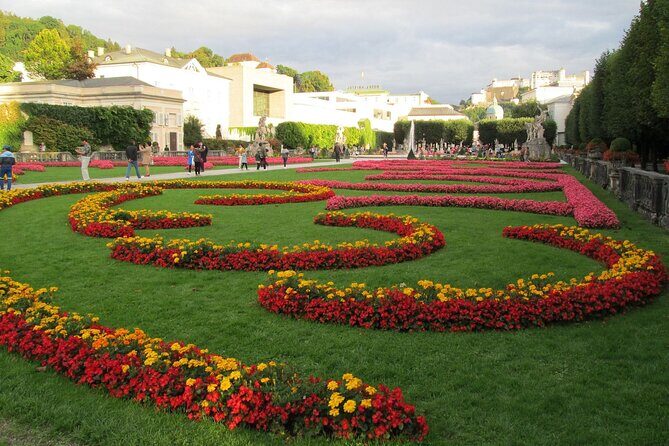
Then you’ll focus on Mirabell Palace and the gardens. You’ll see ornate flower arrangements and mythological statues—details that are fun even if you’re traveling quickly. This stop runs about 30 minutes, and it’s free to enjoy.
I like ending with this kind of stop because it changes the tone from “learning mode” to “walking and noticing.” You still get guidance, but the gardens let you process what you’ve just heard about Salzburg’s identity. It’s a good transition before you return to the Old Town center.
Sound of Music and the stories your guide threads through
Salzburg is famous for the Sound of Music, but the tour treats it like a doorway, not the whole house. You’ll hear tales connected to the Sound of Music and learn how the city’s connections to the story became part of its modern identity.
What’s useful is that these Sound of Music stories come alongside other threads: Salzburg’s medieval salt trade, its advances in medicine, and its classical music connections. This prevents the classic problem—people arrive, watch a film association, and leave thinking Salzburg is just a movie location. With the broader context, you understand why Salzburg looks and feels the way it does.
A strong guide makes this work. You want someone who can shift from architecture to music to historical trade in a way that feels like one story, not three separate mini-tours.
Based on the guide feedback I saw, the best part isn’t just facts. It’s also hosting—staying upbeat, adjusting the walk when the weather is rough, and keeping your group engaged while you move between stops.
Price and value: what $565.93 per group really buys you
The price is $565.93 per group for up to 10 people, for about 2.5 hours. On its face, that’s not cheap. But private walking tours in historic centers often price for what you’re getting: a professional scholar guide, a route designed to cover key landmarks efficiently, and your group not being mixed into a larger crowd.
Here’s where value shows up:
- You avoid decision fatigue: the route links together Getreidegasse, Mozart landmarks, St. Peter’s Abbey, and Mirabell without you needing to build a plan.
- You get interpretation: the guide’s job is to turn architecture and street addresses into meaning, especially around Mozart and the city’s history.
- You can move at your pace: private means your group can keep up without feeling rushed or bored in the wrong spots.
Where value can drop for some people is when their main goal is museum time. Since Mozart Residence admission isn’t included, you may still pay extra if you want to go inside and spend real time in the exhibit. And if you’re the kind of traveler who doesn’t need much explanation, one guide pacing or story style could feel like more overhead than you hoped.
My advice: treat the price as buying guidance, not just access. If you want a guided “Salzburg brain” built in a single afternoon, this price can feel fair.
Timing tips for a comfortable Old Town walk at 2:00 pm
This tour starts at 2:00 pm. That’s a good time for daylight photos and for the city to be lively without feeling like the morning rush. Still, Salzburg can be cold, and the route includes outdoor walking.
From the feedback about a guide finding sunnier stops when it’s really cold, you’ll likely appreciate a guide who thinks about comfort, not just the checklist. Bring a warm layer, and wear shoes that handle cobblestones and uneven Old Town streets.
You’ll also be moving between stops without long breaks. If you want a longer sit-down meal right after, plan your day so you’re not arriving at dinner time depleted. The tour ends in the center of the Old Town, which makes it easy to head to food and drinks afterward—just remember the tour itself does not include those.
Who should book this private Salzburg intro
This tour is a great fit if:
- You want a guided first-day orientation to Salzburg’s Old Town.
- Mozart matters to you, but you’d like the story placed in context, including his family and the Salzburg classical scene.
- You like mixing pop-culture connections (Sound of Music) with real historical anchors (like St. Peter’s Abbey).
- Your group wants privacy and a scholar guide, not a crowded bus vibe.
It might be less ideal if:
- You prefer self-guided pacing and don’t want to pay extra for narration.
- You expect all museum admissions to be included.
- Your priority is deep time inside multiple paid sites rather than a short, well-linked walking route.
Should you book this Salzburg Introduction Private Walking Tour?
If you’re visiting for a short stay and you want to leave with a clear understanding of what makes Salzburg special, I’d book it. The stops are well chosen: Getreidegasse to orient you, Mozart’s birthplace and residence area to give you the music thread, St. Peter’s Abbey to widen the timeline, and Mirabell to end with beauty and details you can just enjoy.
Pay attention to one point before you decide: Mozart Residence admission is not included, so budget for that if you want the full museum experience. If you’re okay with that extra choice and you value a strong guide who can keep the story coherent while you walk, this tour is a solid way to understand Salzburg quickly.
FAQ
How long is the Salzburg introduction private walking tour?
It runs for about 2 hours 30 minutes.
Where do we meet the guide?
You meet your guide 15 minutes before the start time at Coffeehouse Salzburg, Linzergasse 39, unless hotel pickup has been arranged.
Does this tour include pickup?
Pickup is offered, depending on arrangement. If you do not arrange hotel pickup, you meet at the default meeting point.
What is included in the price?
It includes a 2.5-hour walk through the historical center and a professional scholar guide. A mobile ticket is offered.
What is not included?
Food and drinks are not included, and Mozart Residence admission is not included.
What language is the tour in?
The tour is offered in English.
Is this tour private?
Yes. It’s a private tour/activity, and only your group participates (up to 10 people).